
Tapping a checkmark in an app takes two seconds. It provides dopamine and confirms execution. However, daily tracking alone will never fix a flawed habit design. If a habit fails three days in a row, tapping a red X or ignoring the notification does not diagnose why friction occurred.
Sustainable behavior change requires a dual cadence: daily execution check-ins combined with a5-minute weekly calibration review. Daily check-ins tell you if you showed up; weekly reviews tell you whether your system is actually working.
The 5-Minute Sunday Habit Audit
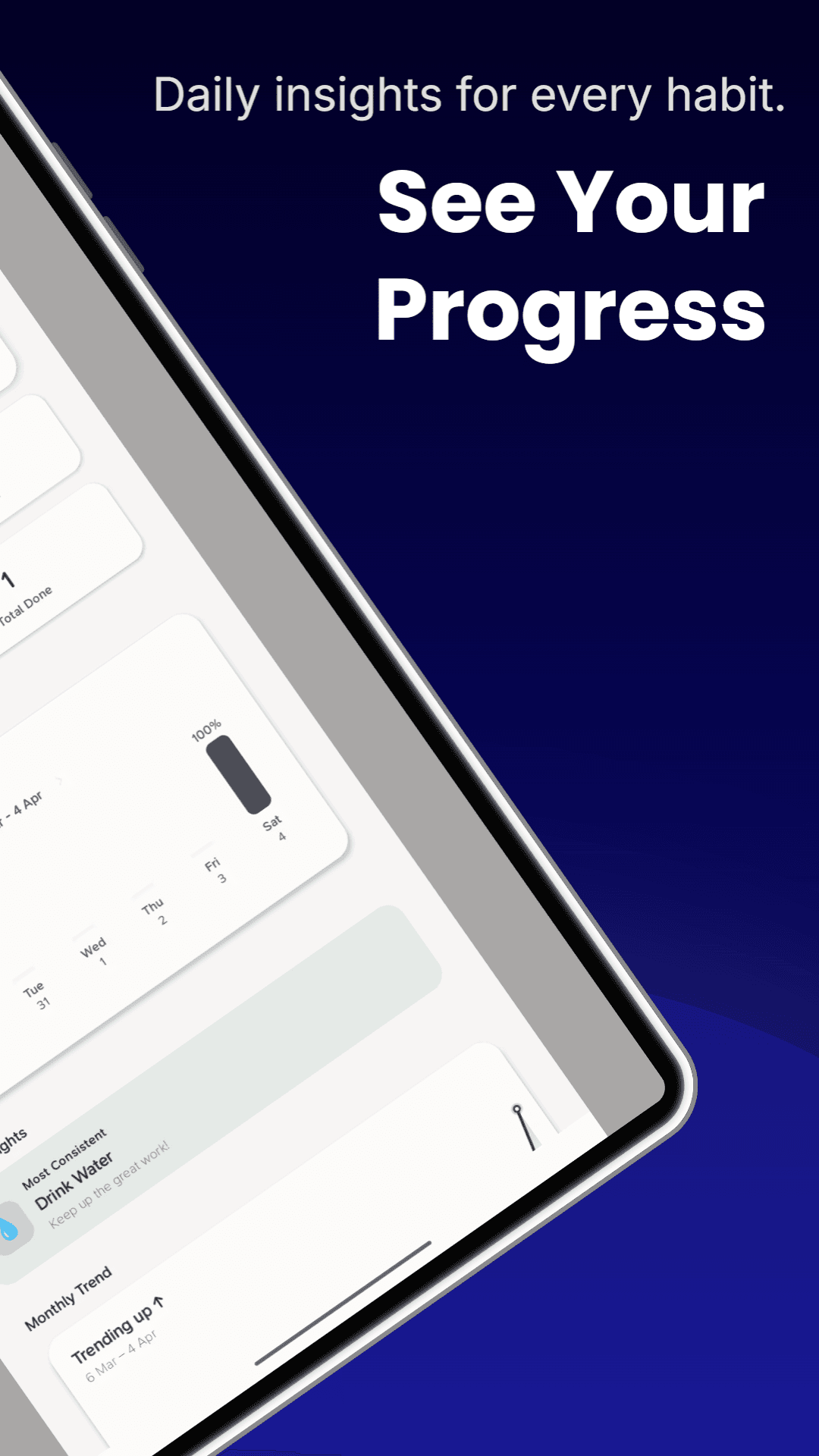
Set a recurring reminder every Sunday evening or Monday morning. Open your Habit First app, review your last 7 days of data across all active cards, and triage each item into one of three color tiers:
Tier 1: Green Status (5 to 7 completions)
Verdict: Working seamlessly. Do not touch it. Resist the temptation to add volume or make it harder just because you had one good week. Let it compound quietly.
Tier 2: Yellow Status (2 to 4 completions)
Verdict: Systemic friction. The intention is good, but the habit collided with your daily schedule. You need to adjust one of the 4 Calibration Levers (detailed below).
Tier 3: Red Status (0 to 1 completions)
Verdict: Dead on arrival. Either the habit is too large, the trigger does not exist, or it is an aspirational fantasy that does not fit your current life season. Shrink it to a 2-minute gateway or archive it without shame.
The 4 Calibration Levers to Fix Failing Habits
When a habit lands in Yellow or Red status, adjust exactly one parameter:
- 1. Scale Lever (Size): Cut the target in half. (e.g., Change 30 minutes of reading to 10 minutes).
- 2. Time Lever (Slot): Move the card from Afternoon to Morning or Evening in Habit First to eliminate competing priorities.
- 3. Cue Lever (Anchor): Attach the habit to a more reliable physical event via habit stacking.
- 4. Frequency Lever (Schedule): Switch from a daily 7-day expectation to an achievable 3-day or 4-day weekly cadence.
Refining Reminders and Cadence in Habit First
Use your weekly audit to adjust reminder times, custom intervals, or notification groupings so your notifications serve as helpful prompts rather than ambient noise.
The One-Sentence Weekly Retrospective
Conclude your weekly review by writing down a single summary sentence in your notes:
“Moving my mobility stretches to immediately after morning coffee fixed my 3-day workout slump.”
Over six months, these 26 single-sentence observations create an invaluable personal operating manual for your psychology and productivity.