
The number one mistake in habit building is starting with the ambitious version you want in six months, instead of the micro-version a tired, stressed version of you can finish today. Motivation is a fleeting neurochemical state driven by novelty, sleep, and mood. If your daily habit relies on feeling motivated, it will collapse within 72 hours.
Lasting habits are built through deliberate friction reduction and micro-commitments. Here is a reliable, five-step framework to establish consistency even on your lowest-energy days.
1. Shrink the Habit to a 2-Minute Gateway Action
Do not start with “exercise for 45 minutes.” Start with put on workout clothes and fill the water bottle. Do not aim to “read 30 pages.” Start with read one paragraph before sleep.
This is what behavioral psychologists call a gateway habit. By making the entry barrier negligible, you sidestep the mental bargaining that causes procrastination. To see real examples of this in action, review our breakdown of the 2-minute rule in practice.
2. Anchor the New Habit to an Existing Neural Loop
Never schedule a new habit in empty time like “in the afternoon” or “when I have space.” Instead, chain it immediately after an unshakeable daily reflex:
- After I pour my morning coffee → I will open my journal and write one line.
- After I sit at my office desk → I will open Habit First and review top priorities.
- After I brush my teeth at night → I will set my book on the pillow.
This technique, known as habit stacking, borrows established neurological momentum so you never have to remember when to act.
3. Use Pre-Made Habit Starters in Habit First
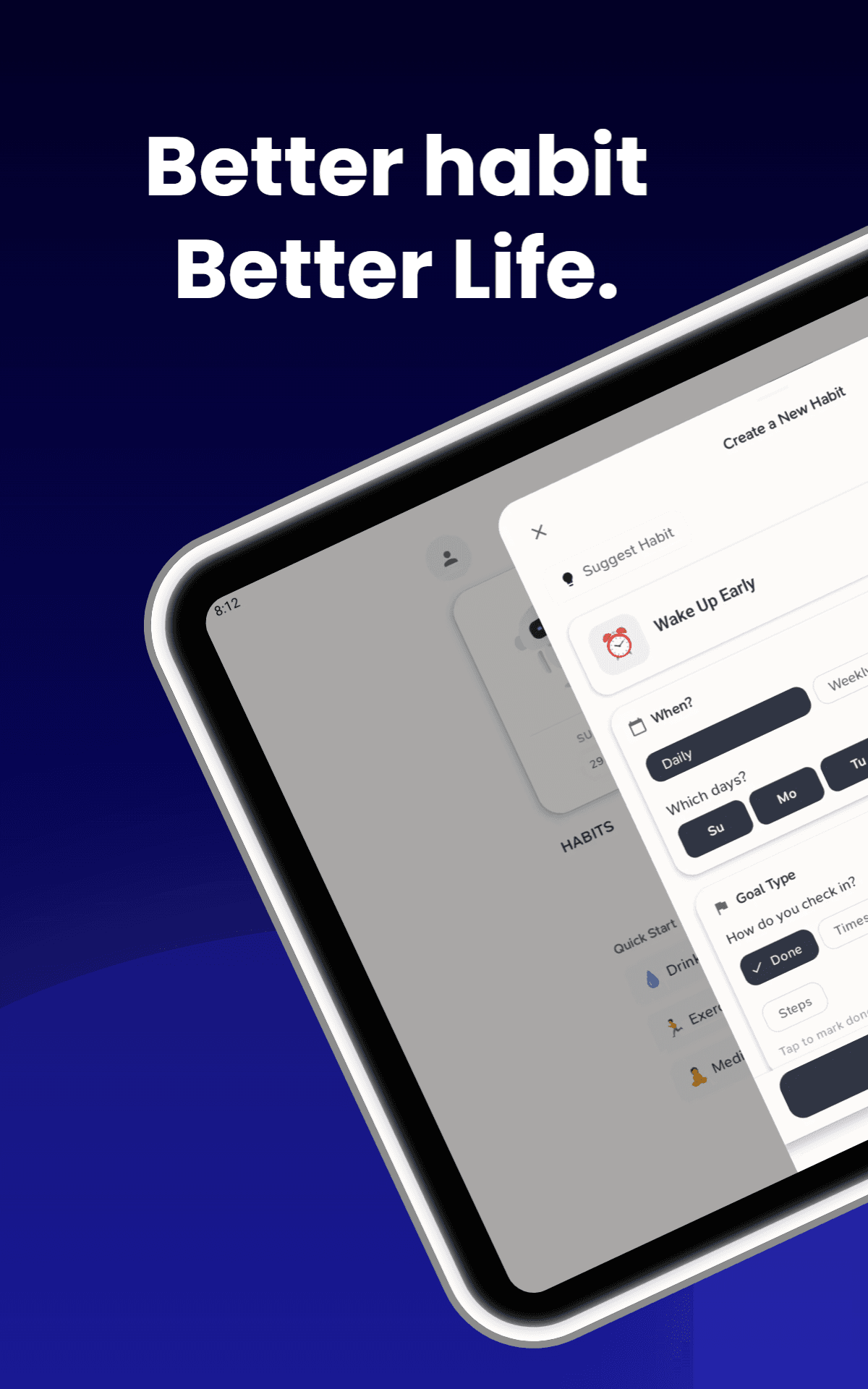
Decision fatigue kills action before you begin. Habit First includes pre-configured, evidence-based starter habits with pre-tuned durations, reminder times, and daily targets so you can get going with one tap.
4. Track Only the Act of Showing Up in Week One
During the first 14 days, quantity does not matter. The only metric that counts isfrequency of appearance. Whether you read one sentence or one chapter, tap the checkmark. Your brain needs repetitive visual proof that “I am someone who reads every day.”
5. When and How to Scale Up
Only increase your habit volume after you have achieved a 14-day unbroken streak without internal resistance:
- Add 5 minutes to your timer.
- Add 2 repetitions to your physical set.
- Add one additional glass of water.
Slow compounding creates routines that survive burnout, travel, and chaotic schedules.