
Popularized by behavioral experts like James Clear and David Allen, the 2-minute rule states:when starting a new habit, it should take less than two minutes to do.
Yet most people misinterpret this concept. They attempt a diluted miniature version of their goal—like doing two pushups and calling it a workout. That feels artificial. The real magic of the 2-minute rule is that it is not a miniature goal; it is a gateway ritual designed to overcome transitional inertia.
The Gateway Concept: The 10 High-Impact Pairs
Your objective is simply to place your body and mind in the physical position where continuing the habit is easier than quitting:
| Ultimate Goal | 2-Minute Gateway Habit |
|---|---|
| Run 5 km 4x weekly | Put on running shoes and step outside your front door |
| Read 30 minutes every evening | Open your book on the nightstand and read one sentence |
| Meditate for 15 minutes daily | Sit on cushion, close eyes, and take three diaphragmatic breaths |
| Cook healthy dinners at home | Open the refrigerator and place olive oil and skillet on the stove |
| Morning journaling ritual | Write down today’s date and one sentence of intent |
| Strength training workout | Do one clean pushup or roll out the exercise mat |
| Learn a language for 20 minutes | Launch the lesson module and complete one flashcard |
| Walk 8,000 to 10,000 steps daily | Put on walking sneakers and step out the door |
| Sleep before 11:00 PM | At 10:45 PM, plug in phone charger in another room |
| Hydrate with 2.5L water daily | Fill your water bottle and set it beside your keyboard |
Why Transitional Friction is the Real Enemy
Human beings rarely procrastinate on the activity itself; we procrastinate on theactivation energy required to transition from rest to motion. Once your shoes are tied and you are on the pavement, running 1 km has almost zero friction.
Using Timers and Incremental Targets in Habit First
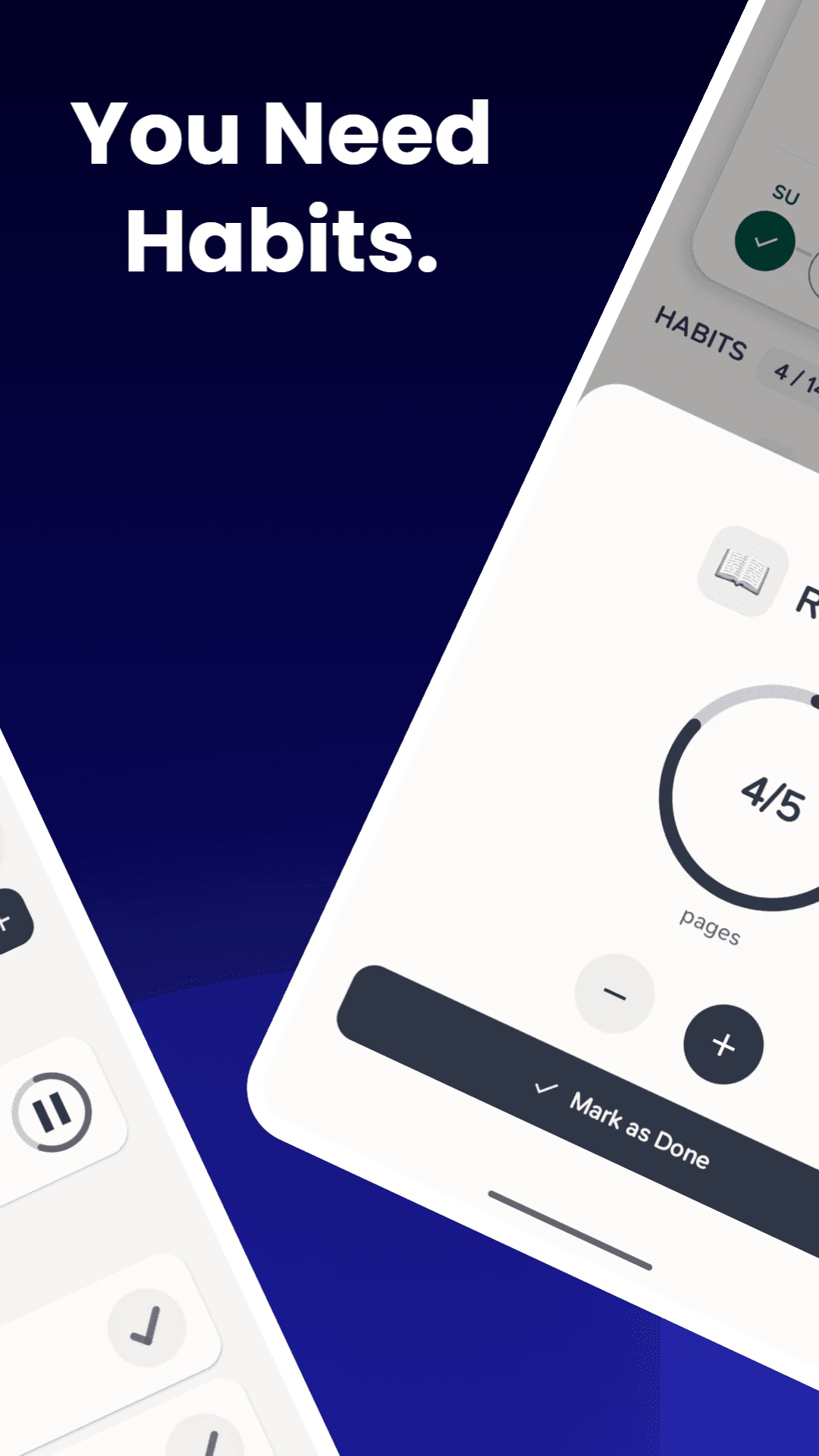
Habit First supports timed habits, duration counters, and step thresholds. Instead of setting an intimidating 45-minute timer, configure a 2-minute or 5-minute initial gateway block.
The Essential Rule: You Are Allowed to Continue
A common concern is: “What if I only do two minutes and stop?” On your worst days, stopping after two minutes is completely fine—it preserves your identity. But on 85% of days, Newton’s first law takes over: an object in motion stays in motion.