Phone alarms and calendar pings are notoriously poor habit reminders. They interrupt you mid-thought, get silenced or dismissed, and fail to generate intrinsic momentum. Behavioral science offers a far more reliable trigger: Habit Stacking.
First coined by Dr. BJ Fogg and popularized by James Clear, habit stacking leveragessynaptic pruning and established neural pathways. Instead of pairing an intention with an arbitrary clock time, you anchor it directly to an automatic behavior you already execute every day without thinking.
The Implementation Formula
After I [Current Anchor Habit], I will [Immediate Micro-Habit].
The anchor must be an unshakeable, physical event. It cannot be subjective (“when I feel calm”) or variable (“sometime after lunch”). It must occur at a specific location, every single day.
15 Battle-Tested Habit Stacks by Time of Day
Morning Foundation Stacks
- After I turn off my morning alarm → I will place both feet flat on the floor and drink one glass of water.
- After my morning coffee finishes brewing → I will open my book and read one page.
- After I brush my teeth → I will perform 10 bodyweight squats or 30 seconds of calf stretches.
- After I button my work shirt → I will pack my gym bag and leave it beside the front door.
Workday & Focus Stacks
- After I sit at my desk with my morning beverage → I will write down my single most critical task for the day.
- After I send my final calendar meeting invite → I will close all browser tabs and stand up for two minutes.
- After I return from my lunch break → I will drink 300ml of water before opening my email client.
- After I shut down my work laptop → I will clear three physical items off my desk to reset my workspace.
Evening & Sleep Stacks
- After I take off my shoes at home → I will immediately change into running/workout gear.
- After I start running the dishwasher → I will wipe down the kitchen counter.
- After I plug my phone into the charger outside the bedroom → I will pick up my reading material.
- After my head hits the pillow → I will name three specific moments from the day I am grateful for.
Scheduling Stacks in Habit First
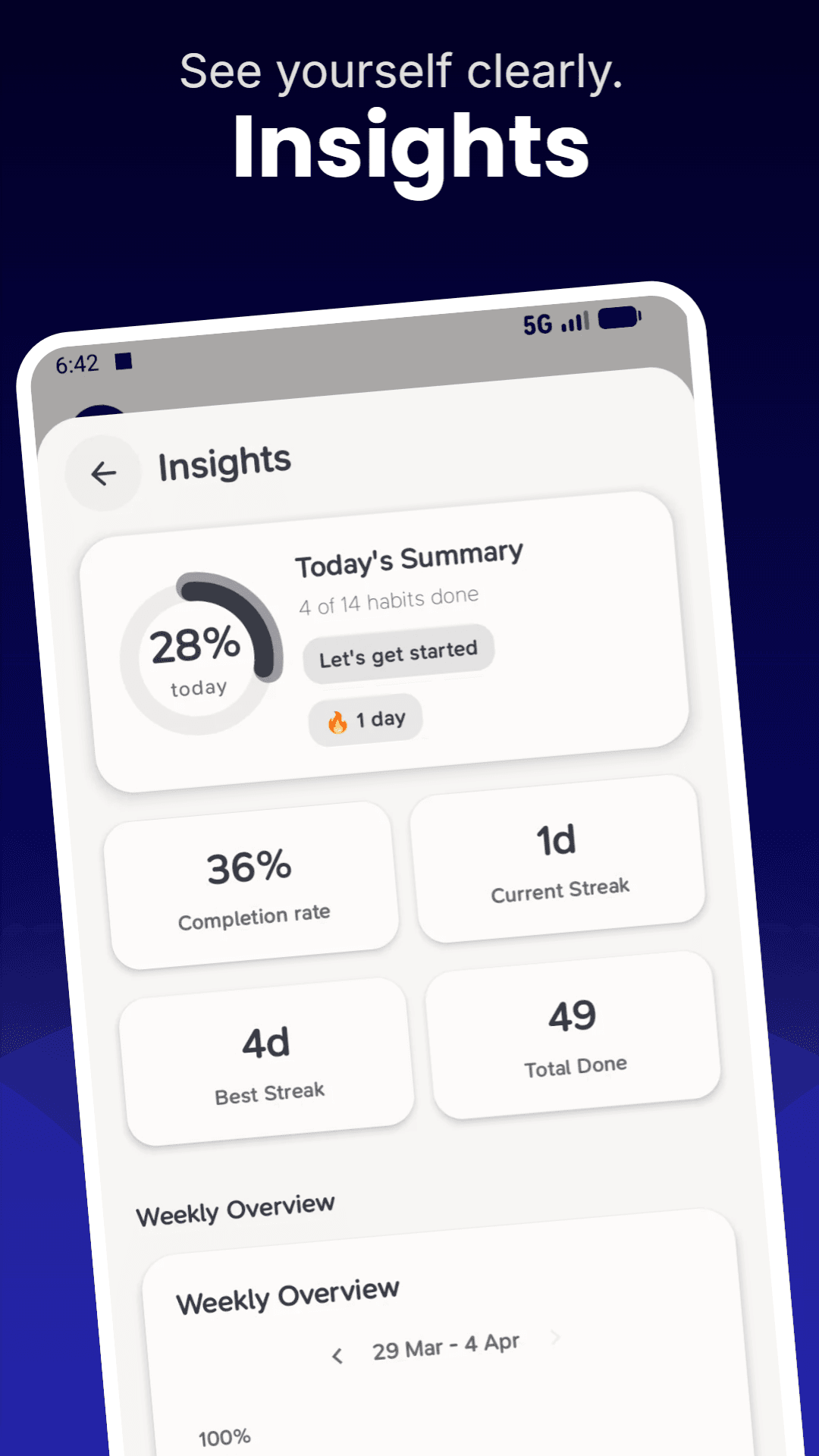
In Habit First, you can cluster habits by daily phases (Morning, Afternoon, Evening, Anytime) and fine-tune notification windows. This mirrors your physical habit stacks on your digital screen.
The Chaining Danger: Don’t Build a House of Cards
Beginners often get excited and attempt a 7-step chain: after A, I do B, then C, then D, then E. Every additional link introduces its own point of failure. If link B is skipped, the entire chain breaks.
Rule of thumb: Keep your stack to two links. Master that pair until it operates on subconscious autopilot (typically 14 to 21 days), then you can safely anchor a third action. For morning stacks, combine this with our guide to realistic morning routines that survive real schedules.