
Online productivity culture has created a caricature of the morning routine: wake at 4:30 AM, endure a freezing ice bath, journal for an hour, drink matcha, and log 90 minutes of cardio before 7 AM. Unless you have full-time household staff, zero commute, and no children, this is fantasy.
A resilient morning routine is not designed for ideal Sundays on vacation. It is engineered for a dark, rainy Tuesday in November when you slept poorly and have an 8:30 AM team call. Here is the pragmatic system that actually survives.
The 3-Pillar Foundation: Anchor, Body, Mind
Strip your morning down to three modular components that can be executed in as little as 12 minutes:
- 1. The Anchor (Awakening Signal): A single physical act that signals sleep has ended. Examples: opening the blinds to let in natural photon light, or drinking 400ml of room-temperature water.
- 2. The Body (Physical Primer): A brief stimulus to activate blood circulation and lymph flow. Examples: 2 minutes of mobility stretches, 15 pushups, or a brisk 5-minute walk.
- 3. The Mind (Cognitive Grounding): A moment of intentional thought before external inputs flood in. Examples: reading one page of non-fiction, writing your top 3 daily priorities, or 2 minutes of quiet breathing.
Three Scalable Templates Depending on Your Clock
The 5-Minute Emergency Rush Edition
- Minute 0-1: Drink 1 large glass of water + open blinds.
- Minute 1-3: 15 air squats and torso twists.
- Minute 3-5: Review today’s single most important task.
The 15-Minute Standard Edition
- Minute 0-2: Hydrate + wash face with cold water.
- Minute 2-8: Brew coffee while doing a 6-minute yoga/mobility flow.
- Minute 8-15: Read one chapter or write 3 daily intents while sipping coffee.
The 30-Minute Comprehensive Edition
- Minute 0-5: Water + natural light exposure.
- Minute 5-20: 15-minute kettlebell workout, run, or brisk outdoor walk.
- Minute 20-30: Shower, journal, and open Habit First to plan the day.
Organizing Morning Flow in Habit First
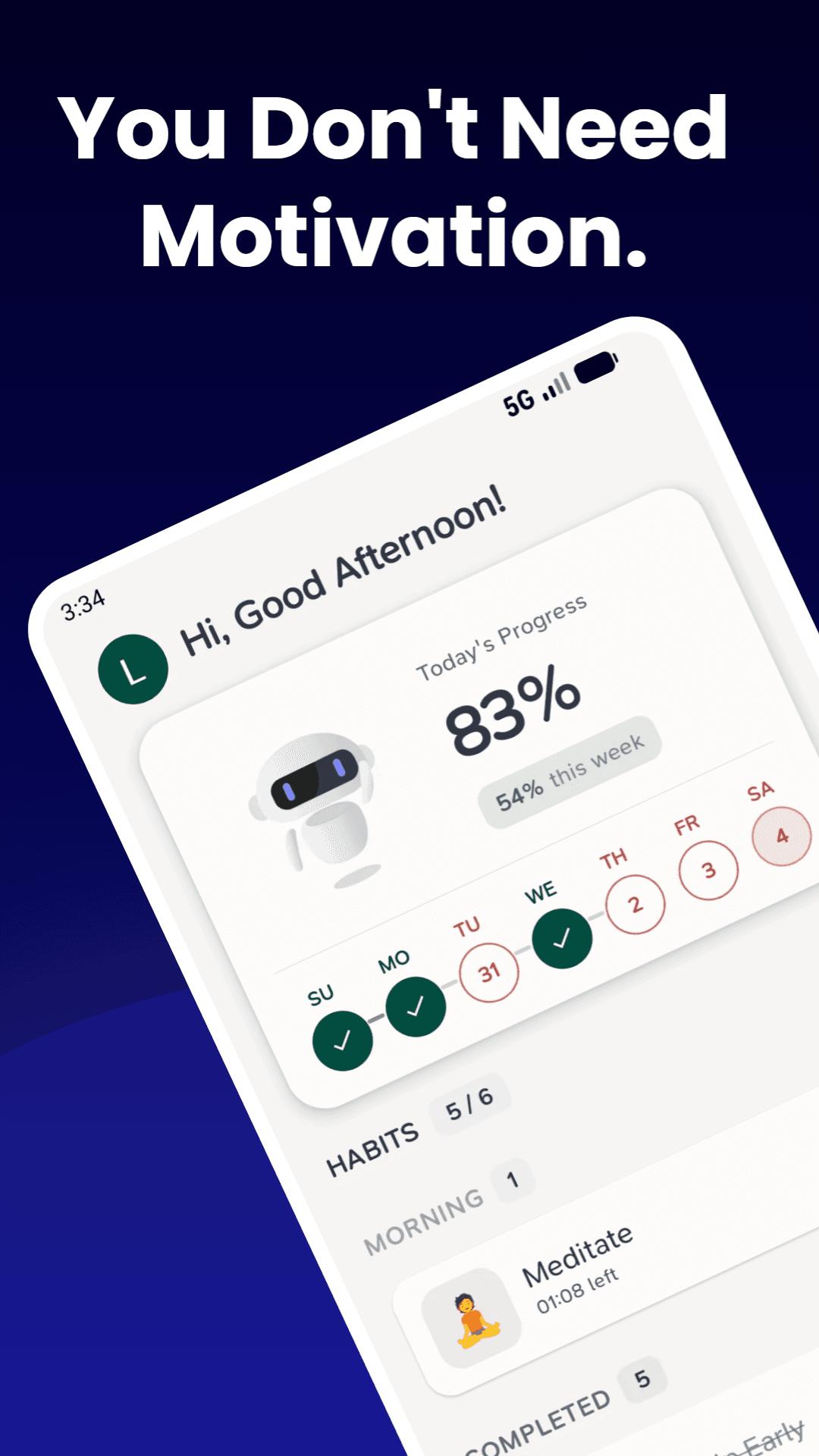
Group your morning essentials under Habit First’s dedicated Morning category. Seeing only your immediate wake-up cards prevents overwhelm and keeps you from doomscrolling through work tasks too early.
The Zero-Decision Rule: Prepare the Night Before
Willpower and cognitive clarity are lowest right after waking up (sleep inertia). If you have to search for clean workout shorts or hunt for coffee filters, the routine will fail.
Apply environment design principles: set out your clothes, prepare the coffee pot, and place your reading book on the counter before going to bed. Your morning self should make zero operational decisions.